
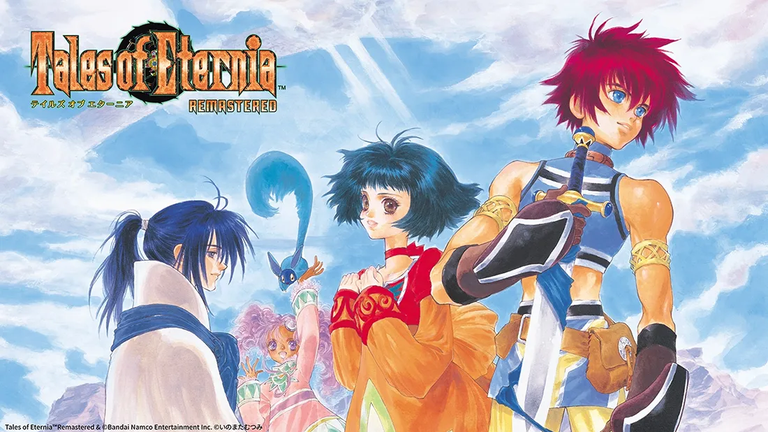
When Bandai Namco announced its latest classic revival, a Tales of Eternia Remastered review was hardly the most predictable headline for JRPG fans, given the title’s overlooked history in the West. Yet, diving into this classic adventure proves that this unexpected release is far more than a simple cash grab; it is a meticulous revitalization of a golden-era role-playing game. Delivering your definitive verdict, this Tales of Eternia Remastered review explores whether this historical journey deserves a spot in your modern library.
Unearthing a Forgotten JRPG Gem
When looking back at the storied history of Bandai Namco’s flagship franchise, Tales of Eternia often feels like a forgotten relic. While fans frequently clamored for modern updates to entries like Tales of the Abyss or Tales of Phantasia, Eternia remained a bit of a black sheep in global markets. Originally launched in North America under the confusing moniker Tales of Destiny II—and later hit with the infamous game-breaking “Volt Glitch” on European PlayStation Portable UMD releases—the game’s history in the West was plagued by logistical hurdles.
| Region / Original Release | Platform | Localization & Technical Hurdles |
|---|---|---|
| North America (2001) | PlayStation | Released as Tales of Destiny II (unrelated to actual Japanese sequel) |
| Europe (2005) | PlayStation Portable | First print batch suffered from the game-breaking “Volt Glitch” |
| Global Remaster (2026) | Modern Platforms | Fully unified title, updated localization, and modern enhancements |
Because physical copies from previous generations were either confusingly named or plagued by hardware-bound software bugs, many contemporary players missed out completely. That Bandai Namco chose to invest serious development effort into a comprehensive modern port rather than an easy, low-effort cash grab speaks volumes about proper catalog stewardship.
Developer Effort and Modern Quality-of-Life Upgrades
Handled by Kyoto-based studio TOSE CO., LTD.—veterans of numerous classic ports and the well-received Tales of Graces F Remastered—this release avoids the common pitfalls of retro JRPG revivals. Rather than applying a blurry, unappealing sprite filter or pushing out a buggy build, the developers packed the package with intuitive adjustments that honor the source material while smoothing out its early-2000s rough edges.
| Quality-of-Life Feature | Functionality | Impact on Gameplay |
|---|---|---|
| Encounter Rate Toggle | Turn random battles on or off | Allows focused exploration without repetitive interruptions |
| Default Run Speed | Eliminates holding down a modifier button | Speeds up dungeon traversal and town navigation |
| Objective Markers | Visual indicators for main and sub-events | Prevents missed side content and tedious wandering |
| High-Speed Mode | Accelerates auto-battle sequences | Reduces grind time during routine skirmishes |
Beyond simple navigation tweaks, community reports indicate that long-time fans will deeply appreciate structural additions like unlocking Nereid’s Labyrinth on a first playthrough. Furthermore, making specific arena matches replayable fixes an old limitation that forced players to restart their saves just to experience high-level combat trials again.
Combat Action and the A-LMBS System
At its core, the gameplay relies on the Aggressive Linear Motion Battle System (A-LMBS), which delivers an arcade-style, dynamic 2D combat loop. Coordinating Artes usage, chaining continuous combos, and managing party members on a two-dimensional plane remains surprisingly engaging.
| Battle System Feature | Mechanical Advantage |
|---|---|
| Aggressive Linear Motion | Fast-paced, fluid 2D movement and real-time striking |
| Arte Chains | Seamlessly stringing special attacks for massive damage multipliers |
| Party Coordination | Directing AI companions to support, heal, or swarm targets |
| Greater Craymels | Elemental spirits providing massive tactical advantages and magic |
Player experience notes suggest that while the 2D plane feels slightly clunky compared to later fully three-dimensional entries in the series, it retains an addictive, high-tempo rhythm. Encounters happen fast, and outmaneuvering aggressive monsters one after another provides instant gratification that turn-based purists might overlook.
Presentation, Skits, and Voice Acting
One of the most exciting additions for Western players is the inclusion of Skits. Completely omitted from earlier English releases, these brief character banter segments add profound depth to party dynamics, world-building, and situational humor.
| Audio / Localization Element | Original Version (PS1/PSP) | Remastered Version (2026) |
|---|---|---|
| English Voice Acting | Dated, cheesy 90s-style delivery | Brand-new professional English dub |
| Character Banter (Skits) | Entirely absent in Western releases | Fully translated and voiced with over 250 skits |
| Translation Script | Confusing naming conventions and errors | Refined script handled by industry professionals |
| Audio Options | English-only constraints | Dual audio support (English or Japanese voices) |
The game features a brand-new English dub that covers major story sequences and hundreds of optional skits. While purists nostalgic for the corniness of the early 2000s voice work might occasionally miss the original flavor, the modern performances breathe much-needed life into Reid, Farah, Meredy, and the rest of the cast. For full details on system specifications and platform availability, you can check the official Tales of Eternia Remastered on Steam page.
System Requirements and Performance
Running modern updates of retro games rarely demands high-end hardware, but having scalable configuration options is always welcome. TOSE ensured the game runs smoothly across a broad spectrum of modern setups, including handheld hardware.
| Setting Tier | Minimum Hardware Specs | Target Performance |
|---|---|---|
| Processor | Intel Core i3-8100 / AMD Ryzen 3 3100 | Stable 64-bit multi-threading |
| Memory | 4 GB RAM | Optimal resource allocation |
| Graphics | Nvidia GTX 650Ti / AMD Radeon HD 7770 | 1080p at 60fps |
| Storage | 8 GB available space | Compact installation footprint |
Whether you are playing on a high-end desktop or verifying your portable handheld compatibility, the performance overhead is exceptionally light. Loading times—a major annoyance on older media—are virtually non-existent, ensuring your adventure flows without interruption.
Frequently Asked Questions
Is Tales of Eternia Remastered worth playing for newcomers?
Absolutely. This Tales of Eternia Remastered review highlights that thanks to modern quality-of-life additions like destination markers, adjustable encounter rates, and a brand-new English script, newcomers can enjoy a classic JRPG without archaic friction.
Does the remaster include original voice tracks or 4:3 display options?
The remaster focuses on a modernized presentation, meaning it features a brand-new English dub alongside the original Japanese voice track, and runs in a widescreen format rather than the original 4:3 box.
Are there any gameplay additions not found in the original releases?
Yes, players can now experience skits that were previously cut from Western releases, tackle Nereid’s Labyrinth on a first playthrough, and replay specific arena matches that were once limited to a single attempt.