
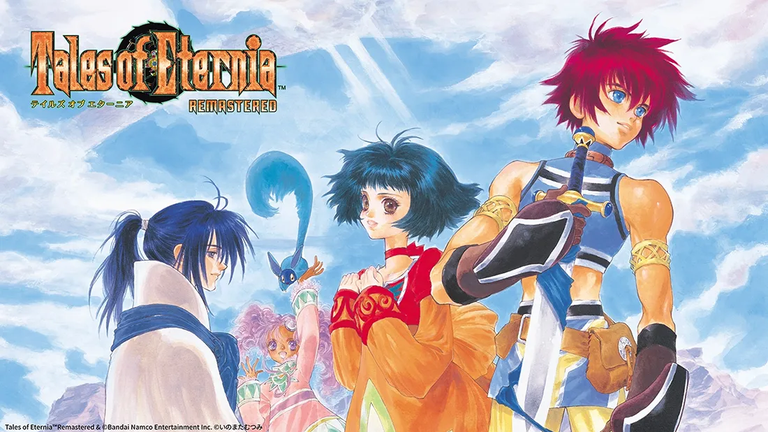
When Bandai Namco announced a comprehensive project for classic entries in its beloved JRPG franchise, understanding the Tales of Eternia Remastered differences became a top priority for returning fans and newcomers alike. Examining the Tales of Eternia Remastered differences reveals how developer TOSE transformed a notoriously overlooked and hard-to-access classic into a modern, polished experience.
A Rocky History: From PS1 to Modern Platforms
To truly appreciate what sets this new version apart, we have to look back at the franchise’s complicated past. Originally released on the PlayStation 1 under the somewhat confusing moniker Tales of Destiny II in North America—and omitted entirely from Europe at the time—the game later arrived on the PlayStation Portable (PSP) in 2005. Unfortunately, that European-exclusive PSP release infamously suffered from the game-breaking “Volt Glitch” on its first print run, which made progression entirely impossible without a corrected UMD disc.
According to community reports and retrospective reviews found on outlets like RPG Site, playing older versions meant dealing with frustrating technical hurdles, severe loading screens, and incomplete localization efforts. The table below outlines how the original releases stack up against the modern edition in terms of accessibility and platform availability.
| Release Version | Platform | Region Availability | Major Technical Hurdles |
|---|---|---|---|
| Original Release | PlayStation 1 | North America only (as Tales of Destiny II) | Outdated translations, no 4:3 alternative flexibility on modern screens, clunky menus. |
| PSP Port | PlayStation Portable | Europe only | Infamous “Volt Glitch” on first-run UMDs, long load times, manual save reloading from hardware restart. |
| Modern Remaster | Multiplatform | Worldwide | None; includes modern stability patches, seamless UI, and full digital distribution. |
Quality of Life Upgrades and Gameplay Tweaks
Developer TOSE brought a massive suite of quality-of-life adjustments to this release, modernizing the 2D arcade-style combat and exploration loop. One of the most frequently requested features was the ability to change default movement behaviors. In older versions, players had to hold down a designated button just to make their sprite run instead of walking tediously across fields.
Other vital enhancements include a toggleable encounter rate, a fully functional New Game+ mode right out of the box, and the ability to pause or skip cutscenes. Based on player feedback from classic iterations, getting lost or missing time-sensitive objectives used to be a common pain point. The new version addresses this directly with optional objective markers.
| Feature / System | Original / PSP Versions | Tales of Eternia Remastered |
|---|---|---|
| Default Movement | Walk by default; hold button to run | Toggleable run/walk default setting |
| Encounter Rates | Fixed encounter frequency | Toggleable encounter rate options |
| Cutscenes | Unskippable dialogue and events | Fully pauseable and skippable scenes |
| Objective Tracking | None; easy to miss missable sub-events | Optional toggleable objective and sub-event icons |
| Dungeon Unlocks | Restricted based on progression milestones | Nereid’s Labyrinth unlocked on a first playthrough |
Localization, Skits, and Voice Acting Changes
Perhaps the single most significant update for Western audiences is the inclusion of character “Skits.” These optional, character-driven conversations add immense depth to the narrative and world-building, but they were entirely omitted from earlier English releases.
Furthermore, the game features a brand-new English voice dub covering the primary story scenes and more than 250 skits. While purists may occasionally miss the cheesy, nostalgic charm of early 2000s voice acting, the modern dub provides vastly superior audio quality and emotional delivery. Item and skill names have also been standardized to align with modern localization standards.
| Translation Element | Legacy Localization | Remastered Version |
|---|---|---|
| Character Skits | Completely absent in Western releases | Fully translated, voiced, and included (>250 skits) |
| Voice Acting | Early 2000s English dub (PS1/PSP) | Brand-new English dub + original Japanese voice track option |
| Item Name: Merenol | Merenol | Mjolnir |
| Item Name: WakeUp Charm | WakeUp Charm | Stun Bracelet |
| Ability Name: Pico Revenge | Pico Revenge | Pow Hammer Revenge |
What Purists Might Miss (And Why the Remaster Wins)
While the comprehensive overhaul makes this the definitive way to experience the adventure, hardcore purists have noted a few specific changes. For instance, the game lacks a strict 4:3 display mode for those trying to replicate exact cathode-ray tube (CRT) display setups. Additionally, the original English voice tracks cannot be toggled on, meaning fans nostalgic for the specific retro performances must rely entirely on the new English cast or switch to Japanese audio.
Even with these minor caveats, the sheer volume of improvements—ranging from redone English scripts translated by Side to streamlined save-loading directly from the pause menu—makes it difficult to recommend the legacy versions.
| Comparison Metric | Legacy Releases | Tales of Eternia Remastered |
|---|---|---|
| Load Times | Noticeable optical disc / UMD loading pauses | Instantaneous or heavily minimized loading transitions |
| Save Management | Required software restarts to load alternate saves | Direct in-game menu save loading |
| Aspect Ratio | Native 4:3 native formatting | Widescreen adaptation with updated asset scaling |
Frequently Asked Questions
What are the main Tales of Eternia Remastered differences?
The remaster introduces quality-of-life toggles like encounter rate modifiers, default running speed, objective markers, a brand-new English dub, fully integrated Skits for Western players, and updated item/skill nomenclature.
Are Skits included in the English version of Tales of Eternia Remastered?
Yes! Unlike the original Western PlayStation and PSP releases which completely omitted character Skits, the remaster includes over 250 fully translated and voiced Skits.
Can I switch back to the original English voice acting?
No, the remaster features a newly recorded English voice cast alongside the original Japanese voice track option. The original early-2000s English dub is not included.
Does the remaster fix the infamous PSP Volt Glitch?
Yes, because this is a completely modern, patched multiplatform release built on a stable codebase, the game-breaking Volt Glitch from the old European PSP UMD print run is entirely a thing of the past.